Tampilkan postingan dengan label a. Tampilkan semua postingan

Jumat, 20 Mei 2016

Pilgrimage for a job Interviews

My job search has resulted unsuccessful so far. Should I be concerned? Well, Im not. I have been applying to positions I know I could be a great ad to the companies out there, but Im still to write my thesis, I suspect no one is going to employ me before this literary burden is done and over. Nevertheless, let me share a personal view on the NOs I got through template rejection emails - Theyre the ones who missing on a great employee!

I am eager to get my first interview, and as part of that process it comes natural to me the need to acquire some interview skills. Honestly, I am more and more inclined to believe that all this being picked for a job is but luck, but in order to be lucky you need to make yourself visible to others. Then, and only then can you get lucky.

Doesnt this job searching and applying resemble a nearly-juvenile Friday night in a discotheque? Nice words, pitch properly, dress accordingly, sell yourself and pray to be seen. Yes, applying for jobs is just like that!!!

***

This post is part of a series of articles I posted under the pilgrimage for a job tag. You can find the previous articles by fetching the toxic up there on the left side.

I couldnt close this first chapter without going through what I found of juicy and pedagogical concerning interviews. How to behave, what to say, what not to say, where to look, what are they made of. These and other resolute questions always populate our minds when we are shortlisted for an interview. Since I am really inclined to abandon academia and join the industry (fingers crossed) most of the pages I have searched point out towards an exit from academia. I hope you find interest in all this information I collected.

The Dos and Donts of interviewing for a non-academic role

1. Do make eye contact, have a firm handshake, smile and stop looking at the floor 
The first exchanges of energy are crucial and if one comes out as confident and friendly, chances are that they are going to like us a lot more. Lets make it easy for them to like us then. And first impressions are extremely hard to change. :)))))))))))))

2. Bring up your market research notes
Interviewers hate unprepared interviewees. You dont want to come out as lazy or not knowing exactly what youre there for. Research the job role, research the company, research the market youll be working in. The more you know the more confident youll be and they will sense that straight away. See it as a company meeting where youve taken your notes to share with your superiors.

3. Maintain a professional composure throughout
Regardless of whatever approach you interviewer stands for, you are the one under scrutiny so dont relax to the point of losing your professional attentive attitude. Yawning, vulgar jokes or simply thinking it is for you to spread legs and cross arms, it is totally unacceptable.

4. Ask questions. They need you as much as you need them.
Have some dignity for gods sake! They are looking for your kind of talent; this is not X-factor where Simon Cowell offends everyone, babbles whatever crazy adjectives he thinks of and is applauded by millions of people in need of being entertained. This is going to be your bosses and colleagues. You need to know them beforehand, so make use of this opportunity before you sign for some guys who couldnt care less about your needs.

5. Follow up notes are not kissing ass but polite reminders.

Mention something particular in your follow-up note. Try mentioning some points in common between you and the interviewer, but dont lose your grip thinking youre old time buddies. Just make sure he will remember you for something good.

Source: [1]

***

Keys to overcome a telephone interview job successfully

1. In this case basic common sense applies. Avoid public areas where noise can be a constraint.

2. Be prepared and open wide your CV to answer straight away to any of the key questions on your experience and skills.

3. The way you answer questions is ever more important than in a face-to-face interview. Here, mistakes cannot be made inconsequential with a smile or a gesture. Listening can help you hit the bulls eye later on by answering properly to a tough one.

4. Its all about your tone of voice when all else is discarded. Image is not present in a phone call, so in the end you will also be assessed for your safe and constant tone of voice.

5. And yet again the follow up. Track the call with an email by thanking the opportunity and reinforcing your motivation.

Source: [2]

***

What one should be asking at a job interview

Ask about everything you find pertinent. Think outside the box. If you are going to ask just for asking then please keep quite. Focus on the good and the bad of doing such job, if there will be training, an example of a typical day in the role, if there is way to progress and climb up the ladder, why do they think theyre good a company for you; ask about their mission, values and culture. As you see there is a lot to ask about!

***

This is what I found for myself and for you also. Make sure you read Liz Ryan post on LinkedIn entitled "Its an Interview, Not an Interrogation", it is quite interesting and will reduce your panicking. And if you are over 40 by any chance, please make sure you read Bobby Edelmans article "Over 40? How to sell yourself at a job interview", everyone alive will be 40 one day, better get ready because the job market is a cold b...

Thats it! Come back this Friday to help me blow the candles of the 5th anniversary of The Toxicologist Today. 5th!!!!!! Awesome.


[1] Five dos and donts during a non-academic interview, White consulting, [http://www.whiteconsultingllc.com/five-dos-and-donts-during-a-non-academic-interview/], last visited on the 24th of August 2015, last update unknown.

[2] Keys to overcome a telephone interview job successfully, First aid for health care, [http://firstaidforhealth.com/keys-to-overcome-a-telephone-interview-job-successfully.html/], last visited on the 24th of August 2015, last updated on the 11th of January 2015.
Read More..

Senin, 16 Mei 2016

Pilgrimage for a Job PhD to Consulting

I have to be proud of myself, but even prouder of the people who actually take some of their precious time to read my blog. I am so happy with the feedback obtained with the previous Pilgrimage for a job post, that it acted like nuclear fuel propelling me to improve my communication even further. From the pit of my heart, Thank you all! 

I think today we have a great lecture ahead of us. I am particularly excited about this one because I have put a lot of thought into the idea of dropping Academia once for all. A role in Industry or a Consulting position in detriment of Academia is my favourite option. Why dropping academia? Why a role in Industry? Why Consulting? 

Answering these questions would require a post for each of them, but in really short words I can assume that the Academia world is a mind-grinding vicious system that uses young talent to exhaustion, postpone their personal dreams taking advantage of their youngness and naivety, and in the end gives them a postdoc throwing most of them to a career void. The Industry does not represent the good guy in comparison to Evil Academia; that is not what I am trying to say. But I cherish the "stability" offered by a position in the Industry and the much better payroll that actually uses more vividly your professional skills. I am a Researcher and I want to be a Researcher for the rest of my life, if possible, but I wish not to be a day dreamer. Consulting has become a real good way out of the Academia for those who are not lucky to nail an Industry job. Please dont take all these answers literally as they are mere bullet-points, but for many like me these explanations are not that far from the truth!

Consulting represents a great future for most of us. I can definitely see myself as a consultant. I speak four languages, I have plenty of research experience in my area, I know a lot about other areas related to mine and I have a good number of strong transferable skills. But what do the experts say about it? I had to read to try and understand how and why to transit from Academia into Consulting. If you feel enticed by becoming a consultant, just stick around for some good advice I collected this week:

1) There are three main types of consulting opportunities (freelance, own company or boutique consulting firms);

2) Many management consulting firms are actively recruiting PhDs in all disciplines (for their strong analytical skills);

3) Some firms will place recently graduated PhDs initially at a lower level until they prove they belong in the business world. And here it is why I have taken/attended/participated in so many venture challenges, business courses and business conferences these last six years.

4) Always check the websites of firms before applying. Read their specific policy to know which position suit you best. Known the Top Management and Consulting Firms. Verify each of them carefully to see if you fit any of their projects, to start with. And if you really see yourself working for the Top Ones, check this list.

Damn Important!!! When applying to companies that serve specific industries, you will be thoroughly tested. On the other hand, if you are going for companies serving many industries, excellent general thinking will be seen highly. Anyways, be prepared for the case interview, seriously! That is essential.

As for career progression an MBA really makes a difference. I actually asked a person in an Oxbridge talk if an MBA was crucial for career progress in the consulting industry. His face along with his simultaneous silence/furrowing brow kind of offended me, but I got the gist.

Also very important is the notion that later on if you have landed a consulting position and feel that you are to look for something different, former consulting workers are highly regarded in the job market, especially for their problem-solving skills gained in a real wide world business setting.

I definitely feel that I need to embrace this possibility and for that matter will have to get back to this subject later on. I hope that the guidelines presented can help you as I believe they will help me when a bifurcation happens and I have to decide. Most of these ideas were obtained from this original article that I have complemented here and there with the links I present you throughout the text. Thanks for reading such a long article. Much appreciated!

Image kindly taken from raise5, [http://raise5.com/service-594] on the 14th of January 2015.
Read More..

A Few Green Allies

In morning mist
a frenzy of drops
from the tree
-Issa


One of the majestic Eucalyptus trees lining the farm
Yesterdays hike around the farm and the adjoining empty land with my son was amazing.  I love seeing everything through his 7 year old eyes, he is one of the keenest observers (and avid collectors) I know.  After all the rain the woodland floor is teeming with new growth.  We both felt like we were inside a huge salad bowl, surrounded by edible greens.  I want to share a few things I have learned about some of these common and useful plants most people either overlook or call weeds. 
??
Plantain leaf (cooling and drying)
?Recently we had quite a severe bought of poison oak run through our household.  Our youngest had it the worst and after a little more than 2 weeks it is finally on its way out.  The saving grace seemed to be washing with Technu lotion over and over, even days after exposure to help contain the rash from spreading and then applying fresh aloe leaf to cool it down and sooth.  I was kicking myself after walking down the hill and noticing plantain popping up everywhere.  This plant is really good for poison oak (and ivy), bites, stings, diaper rash, and any itchy skin irritations, especially with burning or prickling sensations.  As a kid I learned you can chew up the leaf and spit it out onto your skin if you have a bug bite or bee sting.  You can also use it as an eye wash  for sore eyes or conjunctivitis.  Just make an infusion with the fresh leaves and use the tea as a wash topically.  Another great plant for poison oak is jewelweed.  http://www.youtube.com/watch?v=f2wNhs9s5Wo  ?


Cleavers (cooling and drying)
?

Cleavers is out in all of her glory.  Another cooling and drying plant that can be useful in psoroasis, eczema, dandruff, and other dry skin conditions.  This is a good one topically as a compress for fever, sunburns, and bleeding wounds.  Here is one of my favorite naturalists talking about cleavers as a wild edible food.  http://www.youtube.com/watch?v=hQ3jfhI94yY&feature=youtube_gdata_player
 I will be going back to harvest a bunch to juice in the next couple of days. 

Mallow (cooling and moistening)
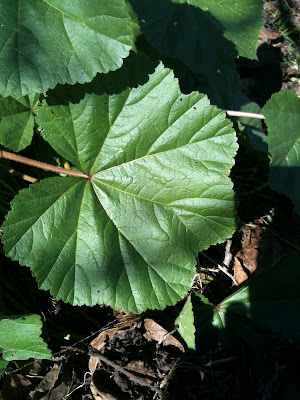
This mallow plant is flouishing under our black walnut tree.  The leaves and flowers of common mallow can be applied as poultices to wounds or drunk as an infusion to soothe coughs.  It is yummy cooked as a vegetable when young and tender.???????? The original marshmallows were made from a plant called marshmallow, (related to common mallow) by boiling pieces of the root of the plant in water, adding sugar and whipping. Then, the thick, white confection was dropped in spoon fulls onto waxed paper to dry into candy.


New growth on a wild artichoke plant

Old wild artichoke head long gone to seed
I think it is beautiful when you can see the different cycles of the seasons on the same plant.  One old seed head that survived the rains and a new baby artichoke growing from the plant.  These plants are extremely sharp and hard to get to without poking yourself but if you can manage it, you can get a free and abundant supply of artichoke hearts that are similar to the domesticated variety, not to mention the leaves make a good digestive aid.   


Sorry for the blurry photo...do you know about this book?  It is one of my all time favorites!  An excellent read and knowledge passed down that we just may need sometime in the near future. 


*Just have to make sure that you all know not to pick or eat any plant that you are not familiar with.  Lots of plants look alike and some are poisonous.  Please go out and learn from an experienced naturalist or herbalist!?
Read More..

Minggu, 15 Mei 2016

Like a bomb defuser


obtained from http://mind-exchange.com/bomb-defuser-5783

Read More..

Sabtu, 14 Mei 2016

Immali corn


I started messing around with corn breeding a few years ago. Corn genetics is messy, the more I learn the more I find that I dont know.  Genetics was so much easier when we knew nothing!

Many varieties of corn suffer from varying amounts of inbreeding depression, to save seed it is best to grow at least 200 plants and save seed from the best 50 to 100.  Some varieties of landrace corn have little to no inbreeding depression, but the down side is that they can be rather variable.  Using landraces as breeding stock means that genetic bottlenecks are not as tight and small populations can be slightly more forgiving.

Corn will happily cross pollinate with other types of corn that are within a few hundred metres up to a few kilometers of each other.  This makes saving corn seed difficult unless you live on acreage and have no one growing corn near you.

As I currently live on acreage and have no one growing corn close to me I save seed from a few different types of corn.  If I get the timing right, and am vigilant with selecting seed and rogueing out off types I could probably grow half a dozen types of corn each year without too much trouble.

I grow some interesting coloured corn, most of which is popcorn or dry corn as there are very few coloured sweet corn varieties available in Australia.  I once looked online at the amazing coloured sweet corn that is available overseas and asked myself: "self, why doesnt someone in Australia breed a decent coloured sweet corn?"  I looked around for someone who was developing a decent coloured sweetcorn in Australia, I could not find them.  I did find some people who are maintaining a few coloured sweet corns and a few who are developing the most wonderful yellow or white sweet corn, but none of this is what I was after.

So I decided to try to breed one myself.
Coloured Sweet Corn
Immali Corn 2015
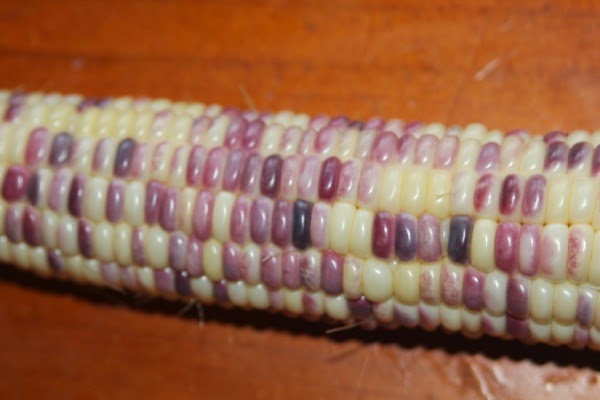
I have some access to different coloured field corn and some different varieties of sweet corn that the average grower would not have seen.  I researched the varieties that I have access to in order to determine the best parental stock for my new variety of corn.  I got a landrace coloured sweetcorn, which tasted ok and has a lot of genetic variation.  This was one of the parents of Immali corn.  Every generation since then has been remarkably better tasting.

Some "Immali corn" seedlings
I planted some of the coloured seeds and saved quite a lot.  The results were good, but being so early it is clearly not stable and had a way to go.  A little back crossing would help to lock in the desired colours and also maintain a high level of genetic variation.

The early cobs lacked much colour, they tasted better than store bought corn but not as great as I had hoped.  Adding colour is not all that difficult, stabilising that colour is a bit more difficult, but I can do it.
Early Immali corn (ignore the yellow) - needs more colour
Tastes great, looks ok I guess, still a way to go

The later cobs look far better and taste far better too.  It is too bad I only get one crop of corn per year so progress is painfully slow.
Look how far it has come
Some fine looking "Immali corn" cobs
Still not there but look how far it had come

They still have a way to go, it is not yet stable and I do not want to distribute this seed until it is a bit more stable.  The colour will always vary a bit, but that is kind of the point.

The taste is a bit up and down right now, some cobs taste good while others taste simply amazing, all of them taste at least as good as store bought sweet corn.  This is mainly due to timing, if picked just right they blow me away, if picked too early or late they are not as good.  I would like to work out how to fix this, the genetics behind this are a bit beyond me at the moment as I do not have access to a good corn genetics book.  By only saving seed from the best tasting plants all of the Immali Corn should taste amazing by the time the colours are locked in properly.

Immali Corn
I worked hard to get here, we ate this cob and the colours remained unchanged through cooking

Once the strain starts to look more consistently like the cob above and is a bit more stable I hope to distribute seeds.  It may never be truly stable, it may be best if it always stays a landrace variety at least to some extent.  I hope that some dedicated seed saver somewhere will see the merits of Immali Corn and continue to grow it after I am gone.  Perhaps I should tell you what i hope to achieve in this variety.

So if I can get more of the cobs to look like the one above, and get the taste to be a bit more consistantly amazing, what else have I tried to include in this variety?

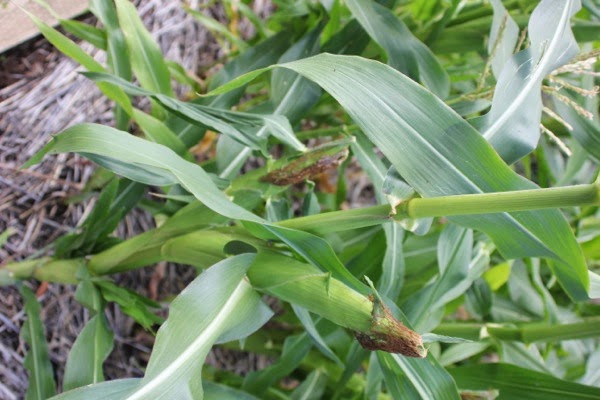
I wanted a reasonably small plant that was productive.  I figure people have less land these days so need small plants that are highly productive.  While 12 foot tall monster plants such as the Giant Inca White corn is spectacular to look at, it is not practical for Suburban Joe to grow in the corner of his yard.  The Immali Corn only grows about 5 foot tall.  It is not a dwarf plant, but it is not a giant either, I think it is a nice manageable compact size.

Immali Corn, reasonably short plants
I also wanted to create a variety that would be productive.  No point having a variety of corn that only produces 1 or 2 cobs per plant.  So far the Immali corn has produced an average of 4 cobs per plant.  I always plant corn too close and the weather is not always kind to corn, given better conditions and more space I think it could average a few more per plant.  Each stem produces 2 good sized cobs on average (some only 1, others 4), but then this variety is very prone to tillering (growing several stems).  This is probably a bad thing if you plan to harvest using a combine, but it is a great thing for home gardeners who harvest by hand.  It essentially means you get several times the corn from the same amount of space.  I am deliberately selecting for plants that produce more tillering as it is this trait that has helped raise the average number of cobs per plant.

Sideways corn picture, note the 2 cobs forming up high and 1 more lower down

 As well as a great tasting corn that is productive and takes up little space, I wanted something that was good to look at.  The cobs needed good colour, which was the primary reason behind this project.  One of the bonuses to using a coloured landrace as one of the initial stock was that the tassels sometimes are purple, it makes the plant look a bit more ornamental.

Immali Corn tassels and cobs
Immali Corn silk
Some of the cobs also display coloured silk.  I do not know if I will be able to keep this trait in this variety, but I will if I can.  It is one of the least important things I would like in the variety, but it does add something special to it.


Where can you get Immali Corn seeds?

Unfortunately for the time being you cant get Immali Corn anywhere, it is not yet stable and I do not want to release it now, stabilise it in a few years and then have confusion over which is the rubbish variety and which is the excellent variety when they both have the same name.  When I do release seeds they will probably be available through my For Sale page.

I think that you should breed some type of vegetable that you like.  Perhaps dont start with corn unless you are already experienced in breeding and saving seeds, perhaps start with a tomato or some beans or something simpler like that.  You dont need any fancy equipment, I certainly dont use anything special.  You dont need formal training in Botany or Horticulture or Genetics like I have, but you can still produce something amazing that can be treasured and passed on to others.

Read More..

Minggu, 08 Mei 2016

A Wild Winter Feast


Post Thanksgiving, we felt that a wild feast was in order so we invited a group of friends, neighbors and family to join us in celebrating together over an enchanting spread of both homegrown and locally foraged wild edible delicacies.  On the menu...homegrown Cornish hens and rabbit roasted in the cob oven with butternut squash, wild green salad with miso vinaigrette, wild oyster mushroom soup, tomato-chard quiche, sauteed apples/sweet potatoes/onions-w/figs and walnuts, rabbit pot pie, braised parsnips and celery root, pumpkin bulgar pilaf, and cranberry onion relish.  (We still have yet to catch one of the wild turkeys so prolific in our area!)


For dessert; steamed persimmon pudding, pineapple guava sorbet, apple sauce cake, popping corn, and caramel apples.  Our beverages were hot yogi chai and pomegranate ginger water kefir.  Not bad for a spontaneous soiree.  We enjoyed and gave thanks for the bounty and good company.  As we approach the beginning of this winter season we are staying mindful of each and every blessing and the quiet simplicity of nature and family that we cherish so dearly. 


Be with those who help your being.  
Dont sit with indifferent people, 
whose breath comes cold out of their mouths.  
Not these visible forms, your work is deeper.

A chunk of dirt thrown in the air breaks to pieces.  
If you dont try to fly, and so break yourself apart,  
you will be broken open by death,
when its too late for all you could become.  
Leaves get yellow. The tree puts out fresh roots 
and makes them green.

Why are you so content with a love that turns you yellow?
-Rumi

Read More..

A Vegetarians Adventure Making Tallow


Last weekend a friend brought me a huge bag of  beef fat to render into tallow.  I have never done this before with beef fat.  Actually beef fat is something I would normally avoid at all costs so I felt a little intimidated.  But this homesteading experience is changing me, I also felt intrigued and up for the challenge.  The fat was primarily from around the kidneys which means it did not have much meat attached.  Everything I read online about the rendering process says you must cut the fat into tiny pieces or put it through a grinder before you cook it down.  Well, I did not do either.  I just cut it all up into chunks, put it in a stock pot, poured in a little water, and set it on a burner on medium low.  I set up an electric burner outside my living space for this project as to not subject my non-beef eating family to the lingering unpleasant smell of cooking fat.  


I then went about my day, making sure to check on the project and stir occasionally, being conscious not to let it burn.  After several hours all the fat was melted and bits of cooked meat were floating on the top. 


It was then time to strain the hot tallow carefully through a cloth and pour into jars.  What I was left with was a clear benign liquid.  When I returned to the kitchen the next morning the tallow had cooled and turned pure white, looking very much like coconut oil.  


I was surprised at how satisfied I felt with the end product.  Perhaps its just me, but I get happy when I find value in things that others would just throw away.  I really like the qualities of beef tallow and would describe it as a sort of animal shea butter.  For all the meat eaters out there, I have read that you can make the best of french fries with tallow.  Personally, I am more excited to use it as the main ingredient in my next batch of soap.  Or it might be interesting to use some in an herbal salve.  Definitely a fun experiment!


Read More..

Sabtu, 07 Mei 2016

Pilgrimage for a job PhD Job Searching the Laura Anderson lecture

A new year is here and you hear yourself selling resolutions that are intended to resolve your problems... good and poetic, but in the long run we all need help focusing on the adequate strategy. Forget 2014; if you are looking to the future and craving for the job of your life, as I am, lets march together and learn from the best. This is the Laura Andersons lecture on PhD Job searching. Ive compiled the key ideas that will definitely help me, as any other job seeking reader, draw the right path to a really good job. Overall, the impression one gets after reading through Laura Andersons contribution online is that we are very ignorant and naive when initiating our job search plan.

Forget about feeling miserable when employers ditch your CV. As Laura states, "only 5% of resumes submitted online ever receive a response" and not all responses are positive ones!

The numbers are clear and painful, "theres more competition for PhD jobs than ever before. Executing a trial and error strategy when applying for jobs reduces the chances of the applicant and slows his/her possibilities when competing with well informed people, e.g., people who actually read The Toxicologist Today!

A crucial rule is that "looking for a job isnt something you should be doing alone". It requires experience, people who know the shortcuts and applicants who are eager to roll up their sleeves and humble their narcissism. Like Dr. Farkas mentions in her post used on my previous article, networking, connecting with the right people, is a must. People build bridges to other people and at some point one of them will realise you GOT IT! Laura states that so clear you should tattoo it on your forehead; "Networking is the starting point of every job search. Over 50% of of jobs come from direct referrals." Lets call it rule zero; the absolute divine truth.

Laura Anderson lists 10 commandments for PhD job seekers. If we follow them biblically, we will definitely enhance our chances of standing above the crowd:

1) You will never hear back after submitting your resume online, however a resume is a very important introductory tool, but always after you have built your network.

2) Most industry jobs are not advertised. This is painful to read because I had been suspicious for a long while. But this confirms my suspicions. For years I have read and heard people talking about friends of friends who found incredible roles that were never advertised anywhere. Jobs so good you could feel the creamy sugar whilst fantasizing with it. And you know why? Hit it Laura - "Companies dont need to advertise their high level positions because there is already a high demand for them. Companies will either hire internally or seek referrals."

"Current unemployment rates for PhDs at graduation is 60-80%." We dont want to be seen rambling in that class, do we?

3) Stiff competition is a reality. This is obvious and mentioned by everyone to the tiredom exponential. What can we learn from it? Everyone is different and even against the most qualified individual you will have something different to him, something that makes you also... an individual. Use it, that is your best weapon. If you are not sure that you have it, the trick here is to "learn skills most of the PhDs do not have". Gosh, this is a hell of good advice, just go get your pen and paper right away before it fades away.

4) Finding an industry job takes time. 2-8 months to find a job, 2 to 6 years to change careers (academia to industry), numbers say. Transition can be lonnnnnng, real lonnnnng.

5) You have 90 seconds to make an impression in interviews, regardless of how cute you are. Laura lists a number of attitudes that put the interviewer off:

- no eye contact (67%)
- poorly dressed/carried (55%)
- no knowledge of the company (47%)
- no confidence/ not smiling (38%)
- bad posture (33%)
- never read The Toxicologist Today (30%).

OK, I made the last one up, but if I was the employer that would be a stop sign for the interview, right there! Do you want me to prove this point? Fair enough; so Laura says that "meeting someone for the first time activates your amygdala", now go check the amygdala article posted on the 23rd of September 2010!!!

6) Cross what is there on offer with what you want to do. And be sure you know what is what.

7) "The first person to place a follow up call to an industry job posting has a 95% chance to get the job position". The following day? 1%! I promised myself that in the future everyone giving me an interview or turning me down well get a thank you note so awesome they will fire/promote the HR guy who made the call.  

8) Negotiating is life. You hate it you hate life. Do it on your terms, but do it for Gods sake. And above all it doesnt reveal your desperation, so it works like a kick-ass attitude and people wont take you for granted. 

9) Hiring managers are people and people sometimes do dumb things. "Over 85% of hiring managers say they hire people they like rather than what the job requires". This is almost rule zero stapled to the networking one. If you cannot act normal as any other human being, just run to some interpersonal skills workshop and pimp your ride because you will need it. Fact!

10) Social media is the word these days. Your resume is too long and too boring. People want the sparkling bits of you. "In 2014 18,400,000 people found jobs on Facebook; 10,200,000 on LinkedIn and 8,000,000 on Twitter. I will have to learn liking Facebook and optimise my Twitter usage.

This was quite a long article, but if you want to start 2015 properly you must show energy, give your very best and reach to the stars. In case you want to read Laura Andersons contribution online, access here. I am not entirely sure she is the responsible one for the original article, but she is the one who advertised it and therefore I hereby acknowledge her incredible contribution to my job seeking strategy.

Image kindly taken from Next Scientist, 9 types of difficult PhD supervisor (and how to dometicate them), [http://www.nextscientist.com/domesticate-difficult-phd-supervisor/].

Read More..

The joy of Winter crops


I like Winter, there are a lot of crops that are never seen in the shops so by growing them myself they are available seasonally and can only be eaten over Winter.  We have just started to harvest a few of them so I thought I should write a post about them.
Skirret - first year plants

Skirret (Sium sisarum)
Now here is one of the greatest, most under appreciated, under utilised and practically forgotten crops ever.  I wrote a post about how I was growing skirret plants from seed earlier.  I should probably write a separate post on them later.  Now it is time to harvest the and eat the skirret.

It has been a long time since I have eaten skirret, I forgot how great it is.  I grew some plants from seed, I over crowded them in a pot which I watered each day by submerging it in a bucket of water, and today I dug up, divided and harvested the skirret.  Normally first year plants have a woody core, none of mine did.  I can not imagine that I happened to chance upon an improved variety, I think this total lack of woody core was due to the huge amount of water they received.

The skirret did not grow a large crop this year, considering the growing conditions that is not unexpected.  However, I was still able to eat a few of the larger roots.  I scrubbed them, chopped them and ate them raw.  They taste a little like carrot but super super sweet.  This is sweeter than anything else I grow, so sweet that I am considering digging up the plants and nibbling on the tiny roots that I initially left on them because they were too small to be worth harvesting.  Truly magnificent.

I have some issues with sugar, I am probably on the edge of diabetes and I often find that fruit juice can tip me over the edge as it is too high in sugar.  I wonder if skirret will cause me any problems here or if the sugars are ok for me.  I guess only time will tell as I only got to eat a tiny amount of skirret today.

Someone in Australia needs to take on skirret as a breeding project and develop a variety with thicker roots.  An improved skirret with thicker roots would be an excellent plant for people to grow in home gardens.  As skirret is not particularly well suited to growing in my climate I do not think that person should be me right now.  If you grow improved skirret let me know, I would love to buy some plants from you.
Skirret offsets divided and  ready to be planted

Dahlias (possibly Dahlia pinnata but more likely to be some crazy un-nameable complex hybrid)
Dahlias were grown as a major food crop by the Aztecs, after Spanish conquest the dahlia was taken to Europe in the hopes that it could be a food crop.  For a few years it was apparently grown as a minor food crop, then the flowers caught peoples eye and they were grown and bred as a dual purpose plant for a little while.  It did not take long for this valuable food plant to be grown purely as an ornamental and lost its use as food.  These days most people do not recognise dahlias as being edible at all, it is too bad.  Some people are breeding edibility back into the dahlia, but not many unfortunately.

Over the warmer months I nibbled on the flower petals, they taste like weird celery, not all that special but not bad either.  Over winter the tubers were traditionally dug and eaten.  They look a lot like yacon, so it makes sense to eat it like yacon so I dug a tuber, skinned it, sliced it thinly and shared it with the kids.  It wasnt bad, but hundreds of years of selective breeding for the looks of the flowers has certainly detracted from its edible qualities.  It tasted like a bland celery, or a tasteless carrot with no sugars, or a yacon that got lazy and forgot to taste like anything, it was also a bit stringy.  It wasnt bad, but it also was not great.  It was also a dwarf variety that was grown in a pot so not surprisingly the tuber was a bit on the small side.  I dare say that they would go well in a stew to bulk it out and take on the taste of whatever it is in with as it did not have much of a taste by itself.

I would love to track down an edible variety and see what they taste like as I think it has a lot of potential.  Perhaps one day someone will breed some tastier dahlias and they can be grown once again as a dual purpose plant.  If you grow any tastier dahlias we should talk.
Yacon tubers ready to be eaten
Yacon (Smallanthus sonchifolius formerly Polymnia sonchifolia)
Yacon is not really suited to my climate, it grew amazingly well near Canberra but it is too hot and dry here for it to flourish greatly.  That being said, yacon is a survivor, it will grow and crop pretty much anywhere.  The crops are larger under some conditions and smaller under others.

This year we got high yields from the yacon, I grew it under a foot of straw and watered it with a green soaker hose that was under the straw.  Apparently it was rather happy growing like that and the plants grew taller than me and even started to flower before the frosts came.  Each plant seems to have produced a lot of large delicious tubers, I like digging yacon in Winter as the smell is unmistakeably like yacon.

I love yacon, I think more people should grow it.  I have yacon growing in three separate parts of the vegetable gardens and I harvested a tiny bit of the corner of one plot.  It gets sweeter if left for a week or so after harvesting before we eat it.  Today I shared one yacon tuber with the kids, they love it even more than I do.
Chinese artichoke tuber
Chinese artichokes (Stachys affinis)
These fun little guys are crunchy, mildly sweet, and look like white grubs.  Unfortunately they did not really produce any crop for me this year, I think they may not have got enough sun during the growing season.  It was also a bit dry where I grew them this year.  As I can not buy them from the shops, this means that I do not get to eat any Chinese artichokes this year...sigh.

Duck potatoes
Duck potatoes (Sagittaria sp) and Chinese Water Chestnuts (Eleocharis dulcis)
These guys both take no effort to grow, crop like crazy and are used in much the same way, I cant believe how rarely people grow them.  I grew them in buckets again this year and they were a bit too crowded so they produced numerous small corms.  I am told that 3 corms in a path tub full of soil/manure/water is the easiest way to grow them large but unfortunately I lack the space to grow them like that so am sticking to small buckets for now.

I probably wont eat many of these as they are a bit small this year, I will feed some to the animals and keep some to plant next year.  Being small this year is not an issue as they are genetically identical to the large ones, planting smaller corms will most likely result in fewer but larger corms being harvested next year.

Jerusalem artichoke flower
Jerusalem artichokes (Helianthus tuberosus)
Some people love them, some hate them, some are indifferent.  I am indifferent, they crop well so I grow them each year.  I cant really taste them and find them too bland, but Tracey finds them a bit over powering.  They are used like a potato, we have even used them as mash mixed in with potato.  They do not store well when dug so are best left in the soil until they are needed for a meal.

I think they are a great survival food as they are not bothered by diseases, are very prolific, and have many uses.  Our alpacas, sheep, poultry etc seem to enjoy eating the leaves and tubers.  The leaves are apparently very allelopathic so can be used as mulch around perennials to prevent weed germination.
Jerusalem artichoked growing in dappled shade


I am sure there are a few other things ready at the moment that I have not mentioned (such as perennial leeks).  If you are interested I do sell many of these vegetables on my for sale page.

Read More..

Skirret a forgotten perennial vegetable


I have never met a person who dislikes Skirret (Sium sisarum) and I dont expect this to change.  Very few people in Australia grow skirret or have even heard of this remarkable vegetable, but those that have tried it all seem to like it.
Skirret seedlings still with their juvenile leaves

What is skirret

Skirret is primarily an ancient root vegetable, but the leaves, stems and seeds are also edible and tasty enough in their own way.  This perennial root crop was grown and eaten across most of Europe for centuries prior to the Spanish conquest of South America.  After this time potatoes largely replaced skirret for a number of reasons.

Skirret is a perennial vegetable which, unlike many other perennial vegetables, also freely sets viable seed each year.  Most people who grow skirret reproduce it by breaking the plant into many smaller plants after harvest and replanting them.  Similar to yacon, the part you eat of skirret is different to the part you plant so you can increase the number of plants each year easily while still being able to enjoy the full harvest.

Seed grown skirret displays a lot of genetic diversity, I assume this is because no real breeding work has ever been done on it and it is mostly propagated by division rather than seeds.  Serious breeding of vegetables often results in highly inbred strains which contain all the desired traits but have little to no genetic diversity.  Sometimes this deliberate selection goes a little too far and the plants become highly susceptible to inbreeding depression (such as has happened to carrots and corn), other times it does not appear to bother the plants too much (such as tomatoes or beans).
The same skirret seedlings getting larger

What does skirret taste like

I am bad at trying to describe what things taste like and it has been a while since I last ate skirret but I will give it a go.  Skirret tastes kind of like carrot or parsnip or even a little like sweet potato or potato, but is sweeter than any of them.  That is probably not a great description as carrot and potato taste nothing alike.  Many people use skirret in the same dishes that potato, sweet potato, parsnip or carrot would be used.

Skirret also used to be used for deserts and the like, but I am not exactly sure how/what they do with it in these meals.  As mentioned earlier, most of Europe grew and ate skirret until the potato came along so it has a long history behind it as a food plant.

Skirret contains reasonably high levels of sugars and tastes rather sweet.  When the Germans were searching for alternative plants to sugar cane they reported that skirret ranked below the white sugar beet but above red beetroot.  Some of the common names for skirret translate into things like sweet root, water parsnip and sweet water root.  From these names you get the impression that skirret is sweet and likes to grow near water.
At this point I perhaps should have re-potted the plants separately

You can see the plant in the middle is already starting to divide

Problems with skirret and how to overcome them

Skirret can have thin roots, these can be a pain to prepare for a meal.  The roots are always long and there are always copious amounts of them, but if they are too fiddly to prepare no one will bother to grow or eat this remarkable plant.

Skirret can have woody cores to the roots.  Some people do not mind this, they cook the skirret and strip the roots with their teeth and discard the core.  I cant be bothered doing this and wont eat a vegetable which requires this kind of treatment.  First year plants grown from seed tend to have the woody core, as they age the core gets smaller or apparently even disappears in improved strains.  Lots of water seems to help prevent any woodyness at all.  Considering that this plant grows in marshes in the wild it makes sense that soil moisture would be beneficial.

Skirret loves cooler weather, I dont think it matters how cold it gets the skirret is never bothered.  It goes dormant over winter and is dug/harvested/divided during that time.  It does not love the heat.  As I currently live in an arid climate, lots of heat and very little water, growing skirret takes a bit of work.  Growing in part shade, or in a styrofoam box to help insulate the soil can help this plant to grow in less than ideal climates.  I have it growing in a pot which I can submerge in water on hot windy days.

Skirret is a plant that would benefit from some serious breeding work.  Pretty much every problem it has should be simple enough to overcome if someone puts the time and resources into breeding improved skirret varieties.  I honestly think if someone was serious about breeding skirret that it would only take 3 or 4 years to turn skirret from its current form into something truly remarkable.  If you ever do this breeding and grow improved varieties of skirret let me know as I would love to buy your plants or seeds.
Strong and healthy skirret

Everything looks good


Breeding potential of skirret

One of the great things about skirret is how happily it sets seed each year and it produces many seeds even if only one plant is growing.  Being in the Apiaceae family they produce copious amounts of seed if allowed, similar to a carrot, but in skirret the seed seems to display a lot of genetic diversity even if obtained from a single plant.

Most people who grow skirret do not grow from seed, instead they find a plant and do not let it flower so that all the energy is put into root development.  I think this is a mistake as it is not difficult to find a nice skirret plant, divide it and let one of the divisions go to seed so that you can continuously improve your stock.  Leaving a single plant in your patch to flower is not that great an imposition.  While letting several plants flower would be best, a single plant flowering and setting seed would still give a crop of diverse seedlings from which to cull and only keep the best ones.  The flowers attract a lot of beneficial insects so leaving a single plant in the back corner to flower is of benefit to the rest of your vegetables.

Skirret grows many edible roots which are nice and long, so there are no issues with root length or number, the problem comes from them being too thin and often having a woody core.  It should be possible to breed for superior varieties with fatter and less woody roots.  First year plants are more likely to have woody cores and plants that do not get enough moisture will also have a woody core so selecting for lack of fiber can be a bit tricky.  That being said, many people who have selected for improved plants overseas only do so for about 2 generations and then have plants that they are happy with.

I do wonder if skirret was grown using aquaponics or wicking bed if the woody core issue would be completely resolved due to constant access to water.  If this were to be the case then skirret breeding could focus on fatter roots, having one single focus should mean that improvements are made a lot faster as culling can be more harsh.

One of the issues we have in Australia is that so few people grow skirret that we probably have a bit of a genetic bottleneck.  Hopefully the natural genetic diversity on this plant will ensure that we can still select for improved varieties and make ground reasonably fast.  I would love someone to take on skirret and breed some improved varieties, if the woody core could be bred out of skirret there is no reason that people would not grow it in backyards or even for market gardens.  As mentioned earlier I have never heard of anyone who dislikes skirret, improved varieties could make this crop more common once again.  Skirret does not always cope with summer in my climate so does not always flower (or necessarily even survive) so I probably wont do a lot of serious breeding with it.  That being said each year my skirret does flower I will save and plant seed from the best plants and cull the weaker plants.
Skirret plants with adult leaves

Where to get skirret in Australia

People who know a lot about rare vegetables often tell me that skirret is not in Australia, and due to problems importing the seed that we will never be able to grow skirret.  I dont know how to respond to them as I have grown skirret before and I am also currently growing skirret.
Skirret plants in a small pot

If I divide my plants I will try to sell some crowns over winter on my for sale page.  I will also try to save seed from my best plants each year to sell on my for sale page but skirret doesnt like the heat and aridity of my climate so I can make no assurance that I will have seed or spare plants for sale.  This year my plants are growing very strong and have all divided into several plants, one even looks as though it may be about to send up flower stalk so everything is looking positive.

Failing that some Australian seed companies occasionally carry skirret seed in small amounts and I even know of a lady in Tasmania who sells skirret plants (as well as some other rare perennial vegetables) and will post them to the mainland.  While I have never bought from her we have conversed and I believe that she is honest, that being said I take no responsibility for her service or plants.

At some stage I will include some growing notes on skirret.  If you have never tried skirret I think you should get some and grow it. 

Read More..

Rabu, 04 Mei 2016

Pilgrimage for a job The introductory plan

The time will come when I will finally stop being a student and the doors of a most welcomed career will open for me. I am finally finishing my PhD as theres less than a year to go, and finding a job is my ultimate project. This time I want my job search to be completely different from the desperate entropy that characterised my search plan back in 2010. This time I will focus on the advises of those who know better, the recruiting professionals sharing on LinkedIn, scouting science people for science jobs. I know I have a few things on my side but also some aspects that can work as barriers. On my side the experience, the knowledge and the professional drive. Against me, a strong will to abandon academia, my age, my preferences.

For months I have been collecting numerous pages of authors dedicated to help people find their best career opportunities, enhance the outcome of their searches, apply their inner potential to the best jobs out there, learn how the employment market pulses and moves, and learn not to do common deadly mistakes whilst understanding where to reinforce specific strategies. This job searching market is a cannibalistic organism on its own, and I need to move wisely.

This time I decided to post the steps I am taking to get the job of my life. By job of my life I mean only this, the one job where my profile fits perfectly and its demands fit perfectly on my career prospects. Just that! Because it might be of help to others like me, or maybe your personal/professional experience can help me in the process, I will invite all of you who might be interested to join me in this ever so special Pilgrimage for a job. A dedicated trip to the guts of the system, determined to find the best for myself and consequently for my family. 

The first step I took after collecting all those career related articles was to define inside myself who I am as a professional, what I want for my career and how I want to obtain it. The identity and goal issues are more than resolved. I am now to dwell on the "How to obtain it" bit. Thus, I divided all those articles collected in three main job topics:

1) Search
2) Application
3) Interview

For the coming weeks, months, who can actually say for sure, I am going to analyse all the details the experts share with job seekers. I will learn the talk and walk the walk. Tomorrow, Ill start with the Search section by scrutinising these three articles:

The whole Cheeky Scientist folder dedicated to PhDs looking for jobs, shared by Laura Anderson on LinkedIn

"PhD Jobs: How to transition from Academia into Business" shared on LinkedIn by yet again by Laura Anderson;

"How to get the job you want - Part 1" shared on the University of Nottingham Alumni LinkedIn Page by Neville Gaunt.

I shall see you tomorrow, have a nice Monday!

Image kindly taken from http://kalvikalanjiam.com/english/files/2012/07/job-search.jpg
Read More..

A photon checks into a hotel


A photon checks into a hotel:


- Are you carrying any luggage, sir?

- No, Im traveling light.


Image taken from:
[http://aktuelresim.com/resim/zahiren_fani_hayat%C4%B1_esas_maksat_yapan,_zahiren_cennet_i%C3%A7inde_olsa_da_..jpg]
Read More..

A Little Cuteness To Go Around


Two new rabbits:  heres how the story goes. 
Mom really wants some (or even one) cute rabbit for a pet.  Dad says, "No way, too many animals already.  Lets not get in over our heads!"  In the process of convincing herself that pet rabbits are a good thing, she remembers the permaculture rule that every element of the environment must serve at least three purposes.  Hmmmm.

#1 Manure, of course?. 
#2 Entertainment and companionship.
#3 Umm, cuteness factor?  (does that count?)

Yes, that is definitely good enough.  Being of the scheming sort, Mom devises a plan.  She finds a couple of beautiful American Blue rabbits and decides they would make a wonderful 8th birthday present for their son (who, by the way, is not very interested in adopting bunnies, he really wants a rock polisher, which he later receives).  She gets the rabbits, picks up an old hutch from a friend...
????
hutch before (thanks M!)
???a little paint and voila...a new home for said bunnies now named Marshmallow and Sassafras.  After homemade baking and some extra kisses, Dad isnt really that mad.  And the boys are now quite fond of their new cuddly friends. 

Sassafras

Marshmallow

First tub of manure I will add to the tomatoes and zucchini.
Rabbit manure doesnt have to compost before adding it to garden plants making it a great fertilizer.
This being the first time I have used rabbit manure, we shall see how it goes.
P.S.  Just in case you were wondering the bunnies dont spend all day in that little cage.  We let them out to run in the chicken tractor where they seem to delight in doing flips and eating grass. 
Read More..